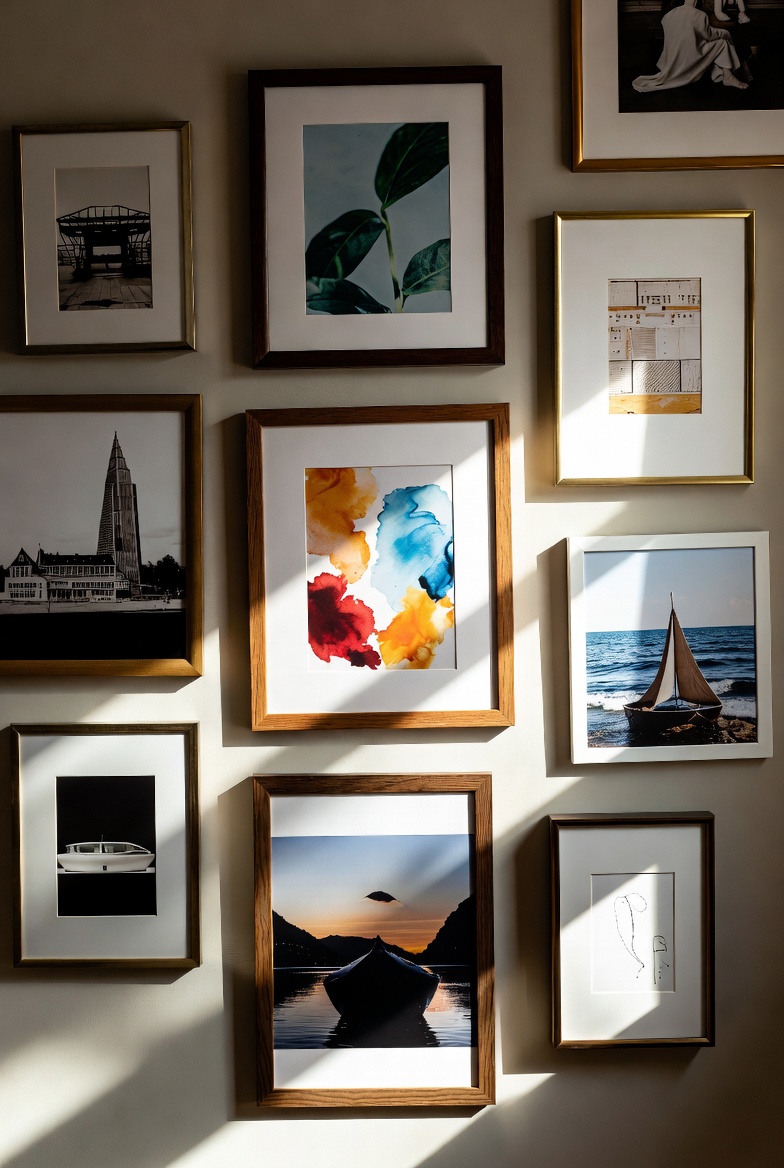
Introduction
A blank wall is like an empty canvas. It’s waiting for your personal touch. Whether you just moved into a new place or want to refresh your space, a gallery wall is the perfect project. DIY gallery wall ideas 2026 are all about mixing textures, playing with scale, and showing off your personality without spending a fortune. You don’t need to hire a designer or buy expensive frames. With a little planning and creativity, you can build a stunning wall display that feels like you. Let’s walk through the freshest trends and practical tips to get it right.
What’s Trending in Gallery Walls This Year
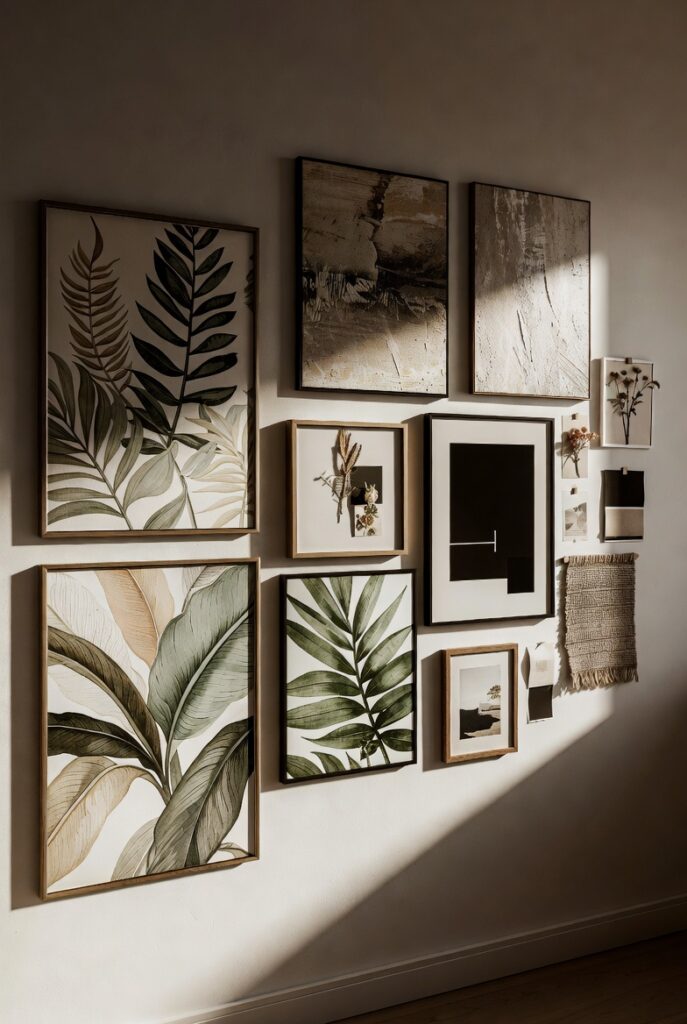
Gallery walls have come a long way from simple photo grids. In 2026, the biggest shift is toward organic, asymmetrical layouts. People are mixing framed art with mirrors, woven baskets, small shelves, and even dried flower arrangements. The “curated chaos” look is huge right now.
Another strong trend is the use of oversized statement pieces as anchors. Instead of filling a wall with twenty small frames, many homeowners start with one large print and build around it. Earth tones, muted pastels, and black-and-white photography continue to dominate color palettes.
Textured frames made from wood, rattan, and recycled materials are also replacing sleek, uniform frames. The goal is warmth and individuality over perfection.
Comparing Popular Gallery Wall Styles
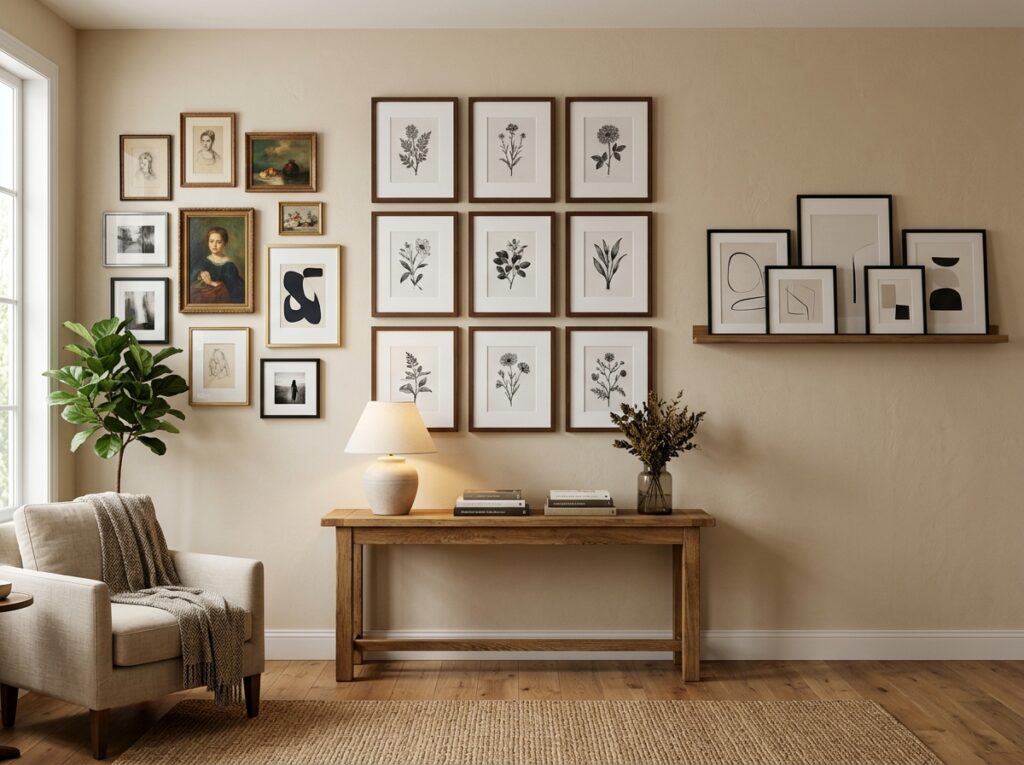
Choosing a style depends on your room, your taste, and how much effort you want to invest. Here’s a quick breakdown of popular options:
| Feature | Option / Type | Description |
|---|---|---|
| Layout | Asymmetrical Grid | Frames of different sizes arranged loosely, creating a casual and modern feel. |
| Layout | Symmetrical Grid | Identical frames in a clean, evenly spaced pattern — perfect for minimalists. |
| Mix Type | Art + Objects | Combines framed prints with 3D items like mirrors, clocks, shelves, or woven pieces. |
| Theme | Black & White | All artwork in monochrome tones for a cohesive, sophisticated look. |
| Theme | Eclectic Color Mix | Bold colors and varied art styles for a playful, personality-driven wall. |
This table should help you narrow down what fits your space before you pick up a hammer.
Practical Tips for Planning Your DIY Gallery Wall
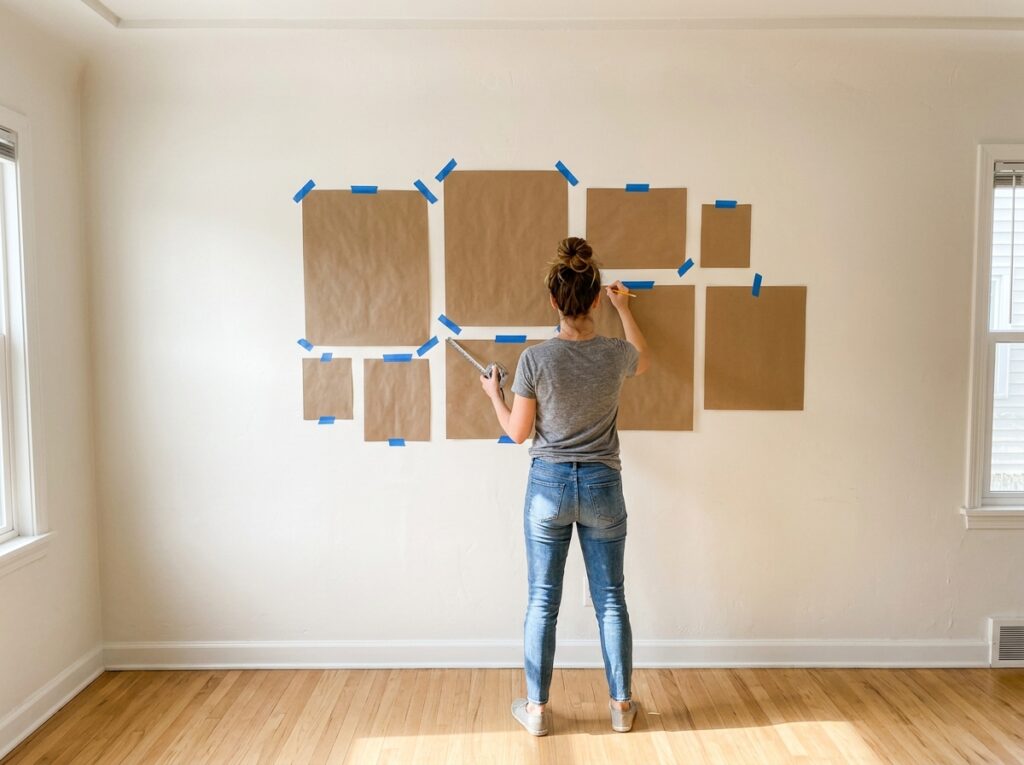
Before putting any nails in the wall, plan everything on the floor first. Lay your frames out on the ground or use painter’s tape to map placements on the wall. This saves you from unnecessary holes and frustration.
Start with the center piece and work outward. Keep spacing consistent — about two to three inches between frames works well for most layouts. Use a level for straight lines, but don’t stress over tiny imperfections. That’s part of the charm.
Pick a unifying element. It could be matching frame colors, a consistent art style, or a shared color palette in the prints. This thread of connection keeps everything from looking random.
Also, consider the wall color. A gallery wall pops best against neutral backgrounds like white, cream, light gray, or soft beige.
Benefits of Creating a Gallery Wall Yourself
The biggest advantage of a DIY gallery wall is cost savings. You control the budget completely. Thrift store frames, free printable art, and personal photos can create a wall that looks like it cost thousands — for under fifty dollars.
It’s also deeply personal. Unlike store-bought wall décor sets, your gallery wall tells your story. Family photos, travel memories, kids’ artwork, and prints from independent artists all come together in a way that no catalog can replicate.
A well-designed gallery wall also adds visual interest to rooms that feel flat or unfinished. It draws the eye, creates a focal point, and makes a space feel lived-in and warm.
Finally, it’s flexible. You can swap out prints, add new pieces, or rearrange whenever you feel like a change. No commitment required.
Common Mistakes to Avoid with DIY Gallery Walls
One of the most frequent mistakes is hanging everything too high. Art should be at eye level — roughly 57 to 60 inches from the floor to the center of the arrangement. Many people hang frames near the ceiling, which disconnects the wall from the furniture below.
Another mistake is using frames that are all the same size and shape. Uniform grids work in specific settings, but they can feel rigid and boring if you’re going for a relaxed vibe. Mix sizes and orientations for depth.
Ignoring scale is another pitfall. A tiny cluster of frames on a huge wall looks lost. Match the size of your gallery to the size of your wall. Fill at least two-thirds of the available space.
Lastly, rushing the process leads to regret. Take your time selecting pieces that genuinely resonate with you. A gallery wall built over weeks or months often looks more authentic than one assembled in a single afternoon.
[GENERATE IMAGE: A close-up of a wall with poorly spaced and crooked picture frames, showing common gallery wall mistakes, slightly messy arrangement, realistic indoor setting, natural lighting, 4K, no text]
Expert Tips for a Professional-Looking Finish
Interior designers often recommend using paper templates before hammering. Cut paper to the size of each frame, tape them to the wall, and step back to evaluate. Adjust until it feels right, then replace paper with actual frames.
Lighting matters more than most people realize. A picture light above your largest piece or a small spotlight can elevate the entire wall from casual to gallery-worthy.
Consider layering. Lean one or two frames on a floating shelf within the arrangement. This adds depth and breaks the flat plane of the wall.
If you’re working with DIY gallery wall ideas 2026 trends specifically, try incorporating at least one non-art element — a small round mirror, a woven wall hanging, or a mounted planter. This dimensional mix is what separates a current gallery wall from an outdated one.
Don’t forget to step back frequently. View the wall from the main seating area in the room. That’s where you’ll see it most, and that’s the angle that matters.
Frequently Asked Questions
Q1: How many frames do I need for a gallery wall?
It depends on the wall size, but a good starting point is five to nine pieces for a medium-sized wall. You can always add more over time.
Q2: Can I create a gallery wall without nails?
Absolutely. Command strips, adhesive hooks, and picture-hanging strips work great for renters or anyone who wants to avoid wall damage.
Q3: What’s the best room for a gallery wall?
Living rooms and hallways are the most popular spots, but gallery walls also look fantastic above staircases, in bedrooms, and even in home offices.
Conclusion
Creating a gallery wall doesn’t require a big budget or professional skills. It just takes a bit of patience, a clear vision, and willingness to experiment. The best DIY gallery wall ideas 2026 focus on personal expression over perfection. Mix your favorite photos with art prints, mirrors, and textured objects. Plan your layout before you start drilling. And most importantly, have fun with it. Your walls should reflect who you are and what you love. Start small if you need to — you can always grow your gallery over time. That’s the beauty of doing it yourself.
Leave a Reply